
Chemistry laboratory table(SF009)
Chemical/Biology/Physics Laboratory Furniture
Model: JH-SF009
The chemistry laboratory table, including physics and biology laboratory furniture, is equipped with features such as chemical resistance, freestanding, traditional colors, simple design, standard cabinet configuration, and beautiful knee boards with drilled holes. All these details create simple beauty and fashion.
You might wonder about the difference between ordinary and chemical lab furniture. Put simply: while standard furniture focuses on aesthetics and comfort, chemistry lab furniture is engineered with industrial-grade materials to withstand chemical corrosion, extreme heat, and heavy-duty usage in rigorous research environments.
Intergrated Advantages of chemical Lab Table
Free design for you
Advanced CNC production machines
Strict quality control, SEFA8M ceritfication
Excellent chemical resistance
Abundant options on color of lab worktops and cabinets and various design of lab cabinets.
Welded or dismantled structure is available depending on transport budget of cleints
Rapid delivery and prompt after-sales service
Material of Chemistry Lab Furniture
Lab Table Top
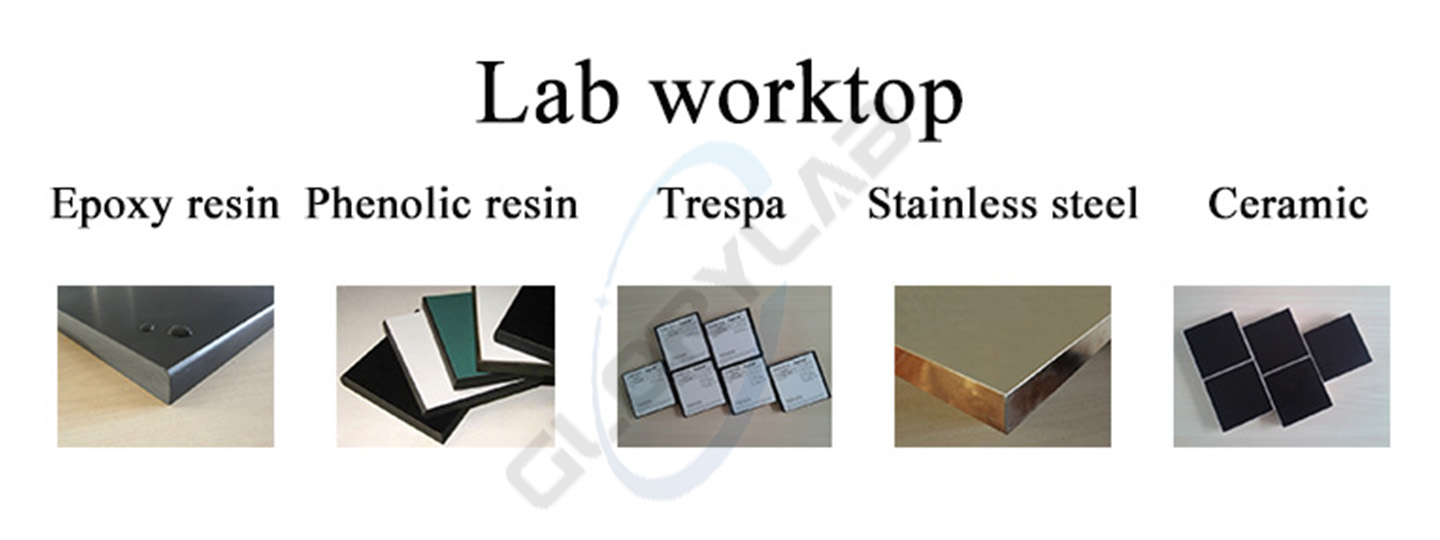
Various types of countertops for this chemistry lab table depends on the customer’s requirements for laboratory furniture. The cost varies depending on the type of countertop. It should meet our clients’ budget and cabin requirements.
There are various options for countertops, including phenolic resin countertops, epoxy resin countertops, ceramic countertops, stainless steel countertops, etc. They all exhibit good acid or chemical resistance. Among them, epoxy resin and ceramic countertops have excellent heat resistance. Phenolic resin worktop is the most popular lab worktops due to its high cost performance.
A cabinet consists of drawers and doors, which are standard features of a cabinet. It also embodies practicality, aesthetics, and simplicity.
Cabinet options for laboratory workbench
1. Double doors and door drawers.
2. 3 drawers or 4 drawers
3. Double doors with 1 adjustable shelf.
4. One drawer and two doors.
5. Single drawer and single door.

The Reagent Rack of Laboratory Island Table
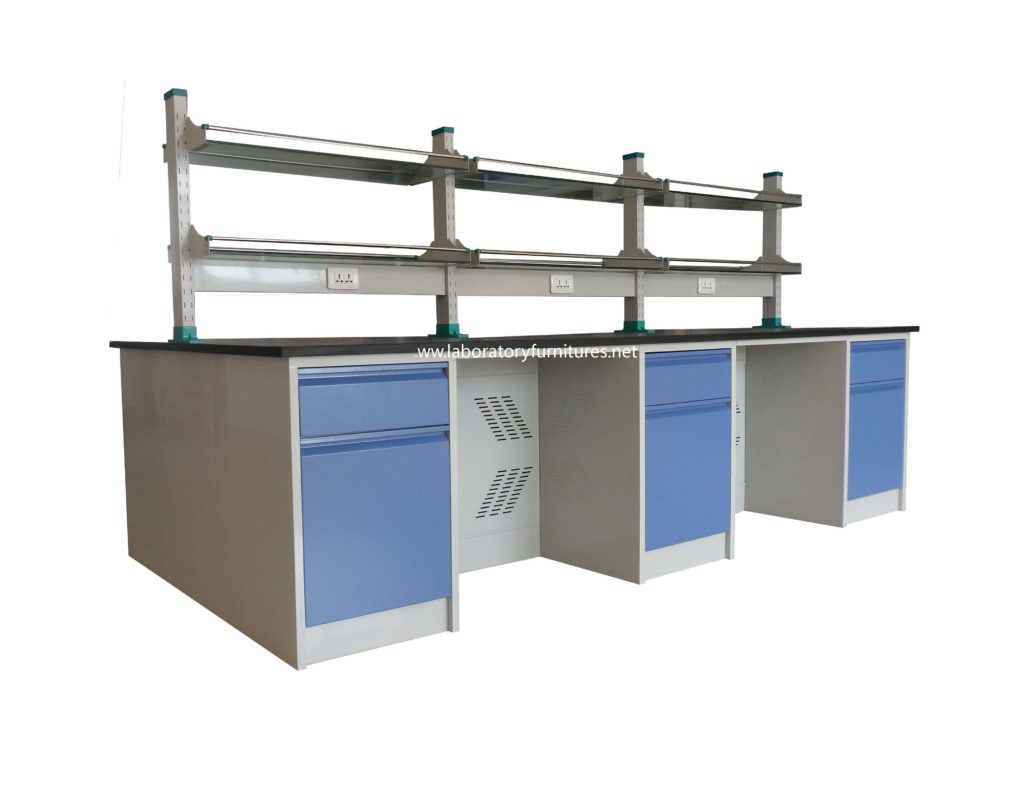
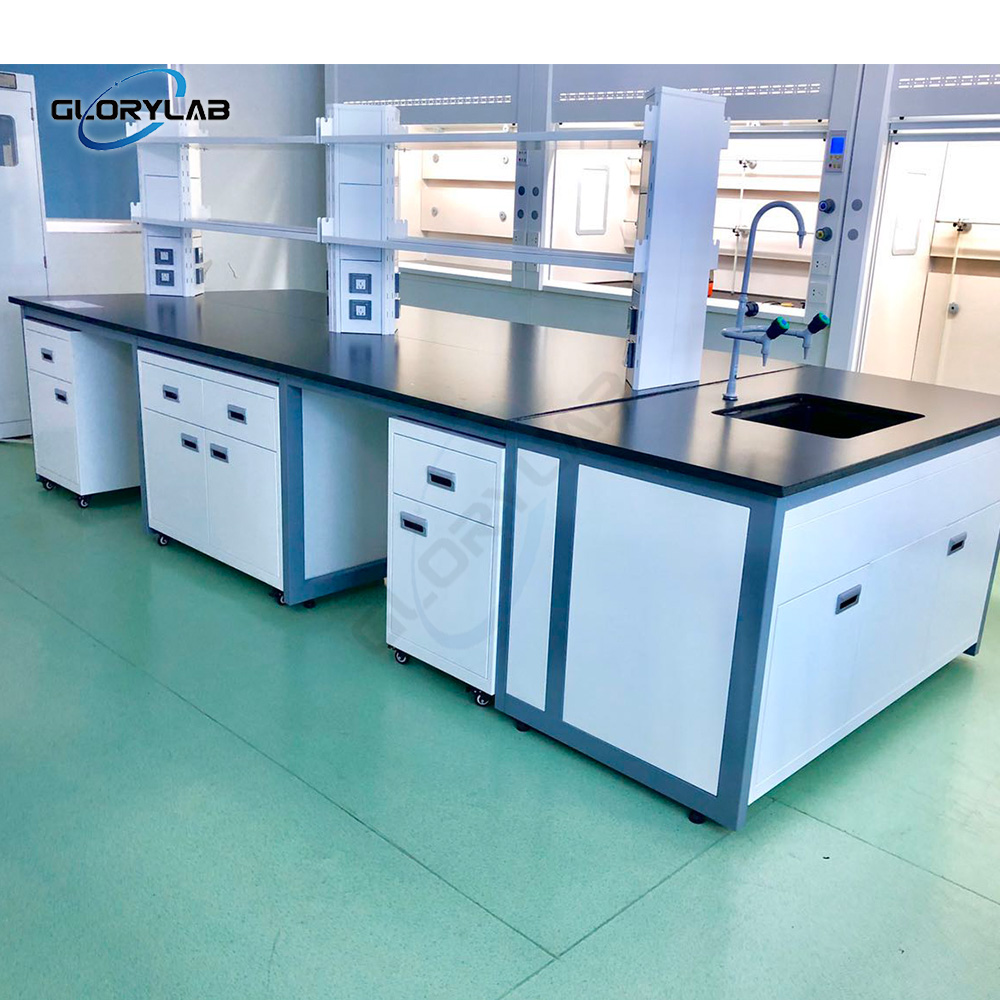
It’s made of 1.2mm thick steel columns and tempered glass. The steel plate between the two columns is specially designed for directly installing sockets on the front, making it more convenient for laboratory staff to operate.
There are two models of reagent shelves. Most clients perfer normal reagent shelf. If you have more luxurious requirements, you can also choose high-end US model reagent racks.
1. Normal Regaent Shelf:
2. Luxious US Model Reagent Rack:
Dimensions of Chemistry Laboratory Table
A. Standard Size
- Length: any size according to measured size at site.
- Depth: 600mm, 750mm for wall bench; 900mm for instrument bench; 1200mm or 1500mm for island lab bench.
- Height: 750mm or 900mm. 750mm is for sitting while 900mm is for standing.
B. Customized Size
Size can be customized according to actual needs of clients.
Laboratory Table Design
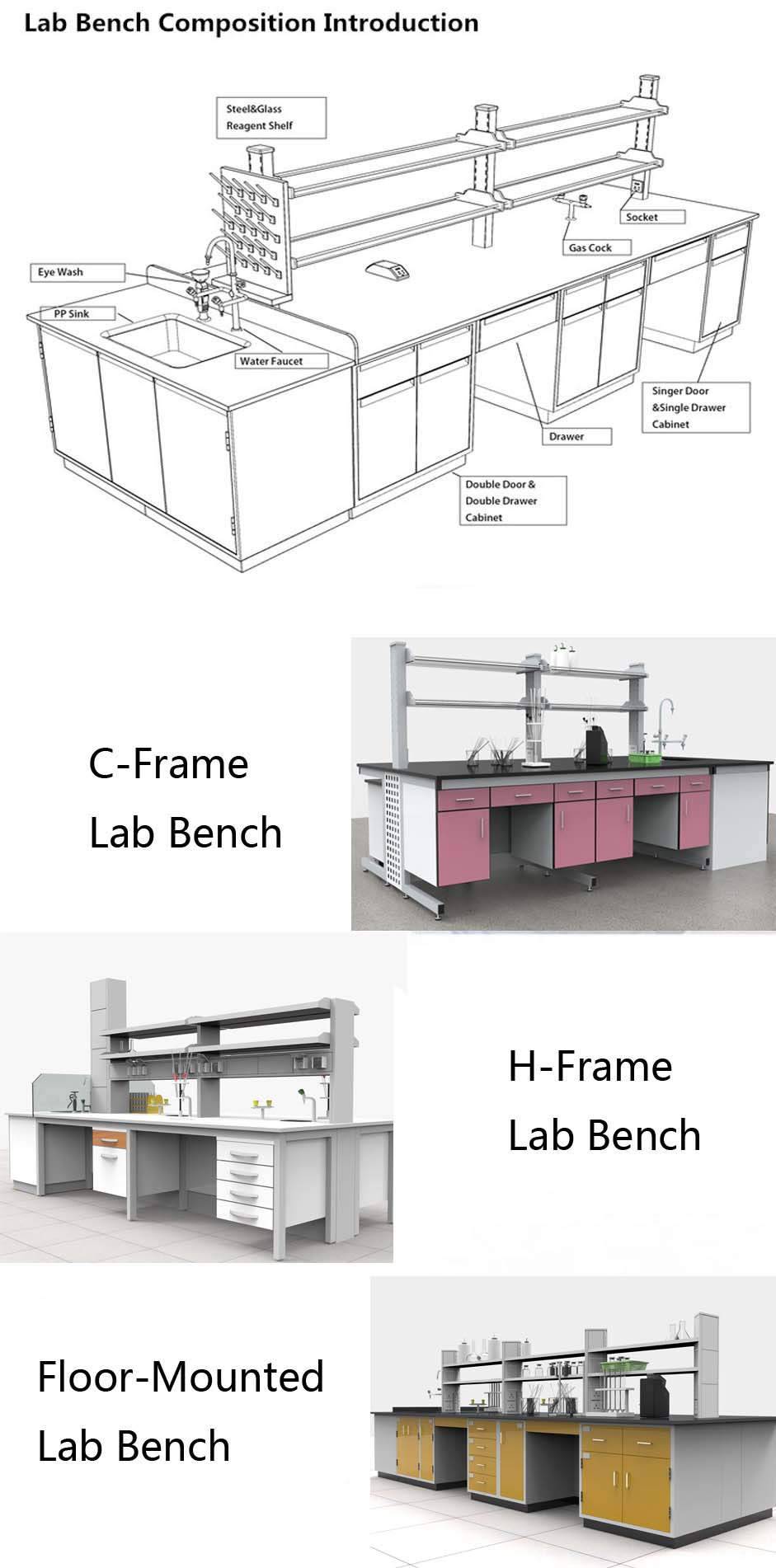
Introduction of Chemical Lab Furniture
| Worktop | a.12.7/16/19mm lab grade phenolic resin countertop. b.16/19mm epoxy resin countertop. c. 20mm ceramic countertop. d. 20mm stainless steel countertop mounted with 18mm plywood/MDF. e. 16/20mm trespa countertop. |
| Structure | Floor mounted/C-frame/H-frame/O-frame |
| Dimension | L*750/1500*850/900mm.(LxWxH) or customization |
| Color | White, gray, blue or specified by customer |
| Cabinet /panel material | 1.0/1.2mm cold-rolled/galvanized steel sheet coated with epoxy resin powder after acid pickling, phosphating,oil and rust removing. |
| Door and drawer | double-layers structure with sound absorbing material inside,keeping noise minimum when door is opened or closed. |
| Cabinet size | 450/500/600/900/1000mm wide or customized size. |
| Steel Frame | 60x40x2.0/40x40x1.5mm/30x30x1.5mm steel pipe coated with epoxy resin powder. |
| Hinge | 304 S.S hydraulic/exterior hinge. |
| Handle | U-shape 128/160mm S.S handle, aluminum alloy grab handle,or any type specified by customers. |
| Reagent shelf | made up of tempered glass and steel plate. Optional model: normal/American model. |
| Wall mounted cabinet | Single/double door with all-steel door or steel door embedded with glass, with 1 adjustable shelf. |
| Other available accessories | Lab sink, lab faucet, various socket, PP/stainless steel pegboard, eye wash, emergency shower,lab stool etc. |

Compared to physical & Biology lab furniture, chemical lab table shows better performance on chemical resistance.
Working Locations of Chem Lab Table
- School, university or institution.
- Industrial production field.
- Medical field
- Food industry
- Agriculture production
- Physics laboratory
- Chemistry laboratory
- Biology lab
FAQ:
Q1: How Much does a Chemistry Laboratory Table Cost?
Several factors influence the final chemistry laboratory table price. To help you estimate your laboratory furniture budget, consider these variables:
- Worktop Material: Epoxy resin, ceramic(premium durability) vs. Phenolic resin (cost-effective).
- Frame Material: Full steel frames are generally more expensive than wood-steel combinations due to their longevity.
- Dimensions & Configuration: Standard sizes are more affordable, while irregular dimensions or modular designs add to the cost.
- Additional Accessories: Integrated gas taps, power outlets, and chemical-resistant sinks.
Q2: Which is better for a chemistry lab table: Epoxy or Phenolic Resin?
It depends on your usage. Epoxy Resin and ceramic are best for high-heat and heavy chemical exposure (maximum durability). Phenolic Resin is a cost-effective, chemical-resistant choice for standard labs and classrooms. Both ensure long-term resistance to harsh laboratory reagents.
Q3: Can I customize dimensions and integrated utilities?
A: Yes. We provide custom chemistry laboratory table dimensions to fit your specific layout. We also offer integrated services, such as gas valves, power outlets, and sinks, ensuring the workstation arrives ready for your research needs.
Maybe you like also


Enquiry Form ( we will get back you as soon as possible )

©2023 Jiangsu Jiahong Laboratory Equipment Co,ltd.
All Rights Reserved.