
» Laboratory Furniture » Multiple Laboratory Casework For Lab Furniture
Multiple Laboratory Casework For Lab Furniture
Various Lab Base Cabinets in Laboratory
Model: JH-LH023
Laboratory casework refers to the fixed or modular cabinets and storage systems of laboratory furniture to support daily experiments, equipment placement, and safe material storage. It is designed to meet different budgets, environmental conditions, and performance requirements. Common materials include particle board, plywood, MDF, all-steel, stainless steel, PP, and phenolic resin. Proper laboratory casework ensures durability, chemical resistance, easy cleaning, and efficient use of laboratory space.
Types of Laboratory Casework
1. Particle casework: It is widely chosen by customers because it is the most economical choice. Please check the following specifications: Cabinet: E1 grade environmentally friendly 18mm particle board, 2mm PVC edging, with 60x40x20mm or 30x30x1.5mm steel frame. Hinge: High quality 304 stainless steel hydraulic hinge. Slide rail: High quality three-stage slide rail, no noise. Handle: 128mm stainless steel.
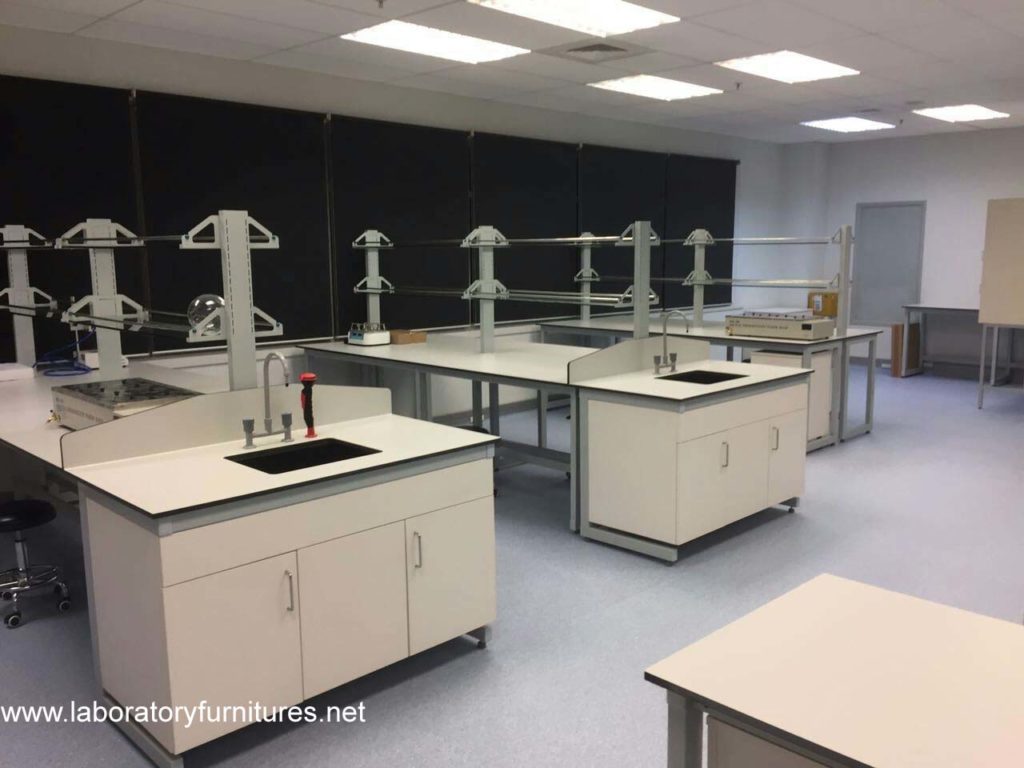
2. Plywood casework: Due to its material structure, it is sturdy, durable, and impact resistant. The price is slightly higher than ordinary particleboard. For some customers with sufficient budget and high requirements for the comprehensive performance of laboratory workbenches, this is their choice.
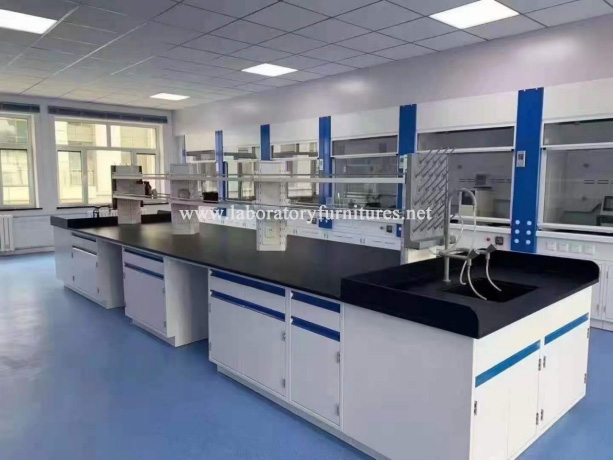
3. All steel cabinet: The steel laboratory cabinet for laboratory workbenches is the choice of most customers because it is easy to clean, resistant to chemical corrosion, and has a service life of over 10 years. Please check the following details: Cabinet: 1.0mm cold-rolled steel coated with epoxy resin powder. Door: Double layered with sound-absorbing material inside. Handle: 304 stainless steel U-shaped handle. Hinge: 304 stainless steel hinge. Slide rail: High quality three-joints slide rail, no noise.
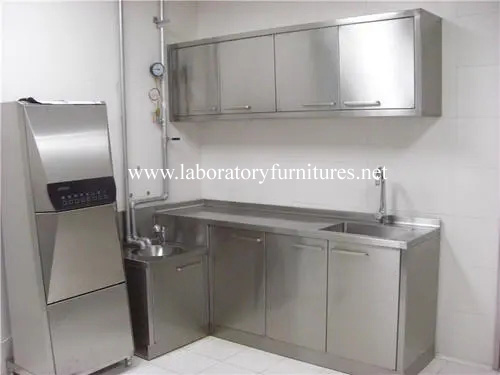
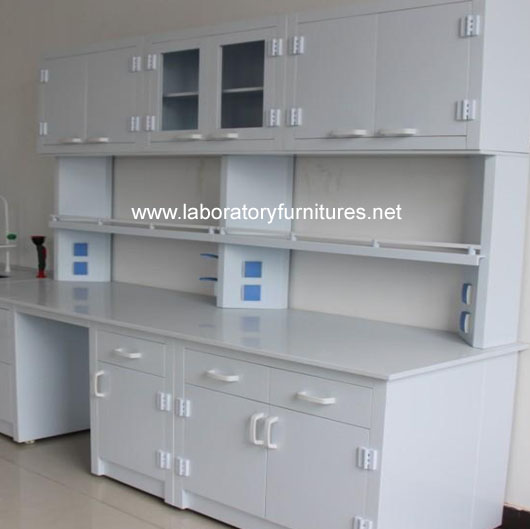
4. Stainless steel/PP/phenolic resin casework: High end case with excellent chemical resistance. This is the choice of some high-end customers.
Our full series of laboratory casework covers all available material suitable to be used in laboratory. Any customer can get ideal option as per their budget and actual requirements.
Picture Display of Lab Caseworks
Wood Casework:
Steel Casework:
Stainless Steel Casework:
PP Casework
How to Choose Laboratory Casework?
Choosing the right laboratory base cabinet requires balancing performance, budget, and laboratory conditions. The following four factors are essential:
1. Laboratory Application and Chemical Resistance
Different laboratories have different exposure levels to chemicals, moisture, and heat. For teaching labs or light-duty use, particle board or plywood casework is usually sufficient. For chemical, pharmaceutical, or industrial labs, all-steel, stainless steel, PP, or phenolic resin casework offers superior chemical and corrosion resistance.
2. Budget and Life-Cycle Cost
Initial cost is important, but long-term value matters more. Particle board is the most economical choice, while plywood offers better strength at a higher price. All-steel and stainless steel cabinets cost more but provide longer service life, lower maintenance, and better return on investment.
3. Local Temperature and Humidity Conditions
High humidity or coastal environments require materials with strong moisture resistance. Steel, stainless steel, PP, and phenolic resin perform better than wood-based materials in such conditions, reducing deformation and extending service life.
4. Durability, Maintenance, and Safety
Consider structural strength, ease of cleaning, noise control, and hardware quality. Features such as epoxy powder coating, stainless steel hinges, silent slide rails, and sound-absorbing doors improve durability, safety, and user experience.
Selecting laboratory casework based on these factors ensures reliability, safety, and long-term efficiency.
Maybe you like also


Enquiry Form ( we will get back you as soon as possible )

©2023 Jiangsu Jiahong Laboratory Equipment Co,ltd.
All Rights Reserved.