
Definition of ANSI/ASHRAE 110-2016
2025-06-29
The ANSI/ASHRAE 110-2016 standard, officially titled “Method of Testing Performance of Laboratory Fume Hoods,” is one of the most recognized and widely adopted performance evaluation protocols for laboratory fume hoods. Developed by the American Society of Heating, Refrigerating, and Air-Conditioning Engineers (ASHRAE), this standard provides a systematic, repeatable, and quantitative method for assessing a fume hood’s containment and safety performance under controlled conditions.
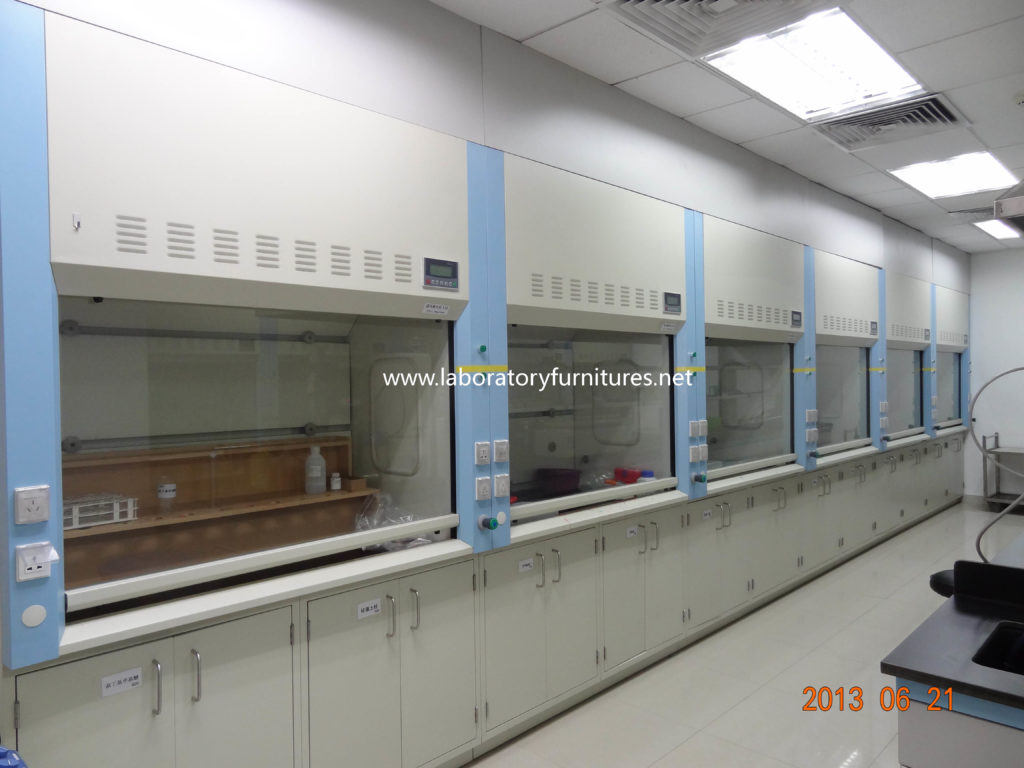
Definition and Purpose
At its core, the ANSI/ASHRAE 110-2016 standard defines how to test a fume hood’s ability to contain and exhaust hazardous contaminants, ensuring that users are adequately protected during laboratory operations. Rather than focusing on the design or construction of the hood, this standard emphasizes actual performance — how effectively the hood prevents exposure to harmful vapors or gases during use.
The purpose of the test is to simulate realistic working conditions and quantify the level of containment using a non-toxic tracer gas, typically sulfur hexafluoride (SF₆). This enables laboratories, manufacturers, and certifying agencies to compare different hoods objectively and verify compliance with safety requirements.
Formation and Development of the Standard
The ANSI/ASHRAE 110 standard was first published in 1985, developed through collaboration among ventilation engineers, industrial hygienists, laboratory designers, and safety professionals. The goal was to establish a consistent and reproducible test method that would bridge the gap between theoretical design criteria and real-world performance.
Prior to ASHRAE 110, fume hood evaluation methods varied widely among manufacturers and laboratories. Some relied solely on airflow measurements or face velocity tests, which do not fully capture the hood’s containment capability. Recognizing these limitations, ASHRAE introduced a tracer gas test methodology, offering a more comprehensive measure of safety performance.
The 2016 revision refined earlier editions (notably those from 1995 and 2010) by incorporating updates related to instrumentation accuracy, test protocols, and data analysis. These improvements ensured that results remain reliable and comparable across different testing environments. The updated version also aligned the standard with modern laboratory safety practices and evolving design technologies such as variable air volume (VAV) systems.
Problems the Standard Solves
Before the establishment of ANSI/ASHRAE 110, laboratories often faced several challenges:
- Lack of uniform testing methods – Each manufacturer or facility used different procedures, leading to inconsistent safety assessments.
- Overreliance on face velocity measurements – While face velocity provides airflow data, it does not guarantee that contaminants are fully contained.
- Absence of quantitative containment metrics – There was no standardized way to measure and compare the actual protection a hood provided.
The ANSI/ASHRAE 110-2016 standard addresses these issues by offering a scientific and standardized performance evaluation. Through its tracer gas methodology, it quantifies the level of containment, identifies weak points in airflow patterns, and enables engineers to make evidence-based design improvements.
Moreover, the standard supports compliance and certification processes, helping laboratories demonstrate that their ventilation systems meet occupational safety regulations and environmental requirements. It also aids in quality control for manufacturers, ensuring that each fume hood model performs consistently before reaching end users.
Components of ASHRAE 110 Fume Hood Testing
The ANSI/ASHRAE 110-2016 test consists of the following fum hood testing components — face velocity measurement, smoke visualization, and tracer gas containment testing. Together, these provide a comprehensive view of a fume hood’s performance.
1. Face Velocity Test
This test measures the average air velocity entering the hood’s face opening. It ensures that the airflow rate is sufficient to capture contaminants without creating turbulence or instability. Typically, the recommended average velocity is around 80–120 feet per minute (fpm), depending on the application and hood type.

Simulation of Face Velocity Measurement Points
2. Smoke Visualization Test
Using smoke tubes or vapor generators, this qualitative test visually demonstrates airflow patterns within and around the hood. Observers can see whether the air moves smoothly into the hood and whether any reverse or dead zones exist that could lead to leakage. This step helps identify potential design or installation issues before proceeding to the more quantitative tracer gas test.

3. Tracer Gas Containment Test
This is the core element of the ASHRAE 110 standard. It involves releasing a known concentration of sulfur hexafluoride (SF₆) near the hood’s work area while a manikin simulates user presence. A gas analyzer positioned near the manikin’s breathing zone measures any SF₆ that escapes the hood. The results are expressed as the average escape concentration (in parts per million), providing a direct measure of containment efficiency.
The test can be performed under different operating conditions, such as:
- As Manufactured (AM): When the hood is new and not yet installed.
- As Installed (AI): After installation but before regular use.
- As Used (AU): During actual operation, with typical equipment and user behavior.

Tracer Gas Measuring
These categories allow stakeholders to assess performance throughout the hood’s life cycle.
Significance and Application
The ANSI/ASHRAE 110-2016 standard is a cornerstone of laboratory safety management. It is frequently referenced by other guidelines such as ANSI Z9.5 (Laboratory Ventilation) and various OSHA and NIH standards. By adopting this testing method, laboratories ensure:
- Reliable performance verification before use.
- Objective comparison among different hood designs and manufacturers.
- Continuous improvement in ventilation efficiency and energy use.
Beyond compliance, the standard fosters a culture of safety and accountability in laboratory environments. It encourages engineers, facility managers, and safety officers to base decisions on quantitative evidence rather than assumptions.
Glorylab safety fume hood and energy saving fume cupboard complies with ASHRAE110-2016 standard completely under strict testing by SGS at face velocity 0.3m/s. It protects lab staff from being harmed by toxic or corrosive fume or smoke of chemicals in fume hood while saving reducing energy consumption by around 40%.
Meanwhile, Glorylab PP fume cupboard JH-FC027 has also passed SGS test in compliance with this standard. It’s pretty difficult to achieve it because PP material is not easy to be processed as steel, shaping complex designs as we need. However, we vercomed these technical difficulties sucessfully after researching for long time.
In a sentence, Glorylab fume cupboard can enhance air quality, protect users’ health, and lower operating costs, making them an ideal choice for sustainable and efficient lab operations.

Maybe you like also

©2023 Jiangsu Jiahong Laboratory Equipment Co,ltd.
All Rights Reserved.