
Selection Guide to Laboratory Furniture Material
2025-12-22
1. Introduction
Choosing laboratory furniture materials is not just a design decision—it directly affects laboratory safety, daily efficiency, and long-term operating costs. From worktops and cabinets to fume hoods and sinks, different materials perform very differently under chemical exposure, heat, and heavy use.
In real laboratory projects, selecting the wrong lab table material often leads to premature surface damage, corrosion, and costly replacements. This guide is written from a practical laboratory furniture manufacturing and project perspective, helping lab planners and procurement teams make informed decisions.

This guide will help you:
-
Understand common materials used in modern laboratory furniture
-
Select suitable materials based on laboratory function
-
Balance performance, lifespan, and budget
2. Key Criteria for Laboratory Material Selection
Before choosing any laboratory furniture material, the following factors should always be evaluated:
| Criterion | Why It Matters |
|---|---|
| Chemical Resistance | Prevents surface damage from acids, alkalis, and solvents |
| Heat Resistance | Handles hot glassware, burners, and equipment |
| Durability | Withstands daily lab operations and long-term use |
| Cleanability | Supports hygiene, sterilization, and contamination control |
| Lifecycle Cost | Reduces maintenance and replacement over time |
In chemical and research laboratories, chemical resistance and durability should always take priority over initial cost.
3. Common Laboratory Worktop Materials
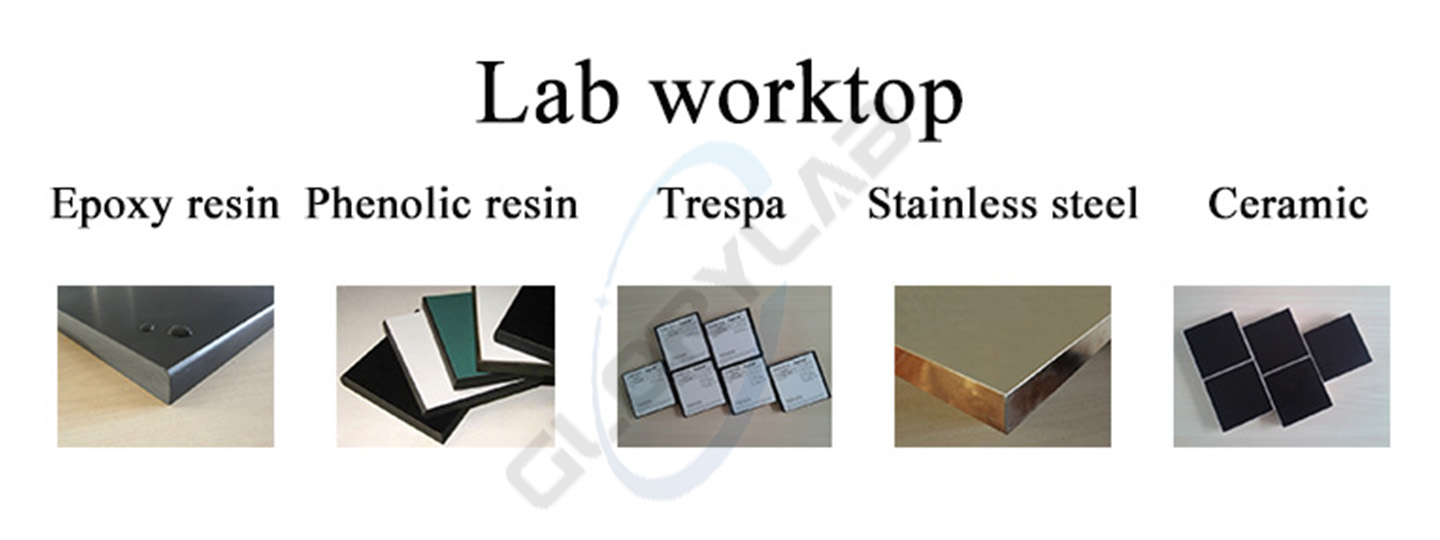
Epoxy Resin Worktops
Overview:
Epoxy resin worktops are widely used in professional laboratories due to their excellent chemical and heat resistance and structural stability. The seamless, non-porous surface minimizes contamination risks and makes cleaning easier.
Advantages:
-
Outstanding resistance to most acids, alkalis, and solvents
-
Good heat and impact resistance
-
Long service life in demanding environments
Recommended Applications:
-
Wet chemistry laboratories
-
Central or wall lab benches
-
Fume hood worktop
Considerations:
Although epoxy resin has a higher initial cost, its durability often results in a lower total cost of ownership over the life of the laboratory.
Phenolic Resin Worktops
Overview:
Phenolic resin is a cost-effective alternative for laboratories with moderate chemical exposure. It is lighter than epoxy and easier to install. It’s the most popular worktop that lab furniture supppliers are exporting considering of intergrated and cost performance.
Advantages:
-
Good resistance to common laboratory chemicals
-
Non-porous and moisture-resistant
-
Budget-friendly for large educational projects
Recommended Applications:
-
Teaching laboratories
-
Light to medium chemical use areas
Considerations:
Phenolic resin has lower heat resistance than epoxy. But it can suit most of clients’ requirements considering of integrated performance.
Ceramic Countertop
Suggestion:
It’s equipped with the best chemical and heat resistant performance among all laboratory countertop. It’s resistant to 800 celsis degree. If your budget is ok, we recomend that ceramic worktop is the best option for your laboratory.
Stainless Steel Worktops
Overview:
Stainless steel, particularly 304 and 316 grades, is known for its hygiene, corrosion resistance, and heat tolerance.
Advantages:
-
Excellent resistance to heat, water, and biological contamination
-
Easy to clean and disinfect
-
Ideal for sterile and wet environments
- Good option for clean room
Recommended Applications:
-
Clinical, clearn room or medical laboratories
-
Sink areas and wash zones
-
Food and pharmaceutical labs
Considerations:
Surface scratching may occur over time. In highly corrosive environments, 316 stainless steel is strongly recommended.
Other Worktop Options
-
PP worktop: Suitable for highly corrosive area. Normal thickness:8mm,15mm. Its anti-scratch performance is weak.
-
Trespa: Made in Holland, it has prominent chemical resistance feature with anti-bacteria performance. Meanwhile, its selling price is extremely high.
-
Granite: Strong and scratch-resistant, but heavy and often requires reinforced cabinet structures.
4. Cabinet and Casework Materials
Steel Laboratory Cabinets
Steel cabinets form the backbone of most modern laboratory furniture systems.
-
Cold-rolled steel: Smooth finish, high strength, widely used with epoxy powder coating. it lasts several pre-treating and coating processes to ensure its chemical resistance and adhesive force before coating.
-
Galvanized steel: Enhanced corrosion resistance for humid environments due to its unique zinc coating technology.
Steel cabinets are suitable for chemical storage, under-bench cabinets, and support frames.
Steel Storage Cabinet:


Wood-Based Cabinets (Plywood, MDF, Chipboard)
Wood-based materials are generally used in office-adjacent or low-risk laboratory areas.
Advantages:
-
Lower cost
-
Light weight
Limitations:
-
Poor chemical and moisture resistance
-
Not suitable for wet labs or heavy chemical use
Note:
Plywood is the best among all wood material because it has the performance of impact and water resistance. It has longer lifetime than othter wood material.
General Cost & Performance Ranking:
316 stainless steel > 304 stainless steel > steel cabinets > plywood > MDF / chipboard
Lab Wood Casework


5. Accessories and Supporting Components
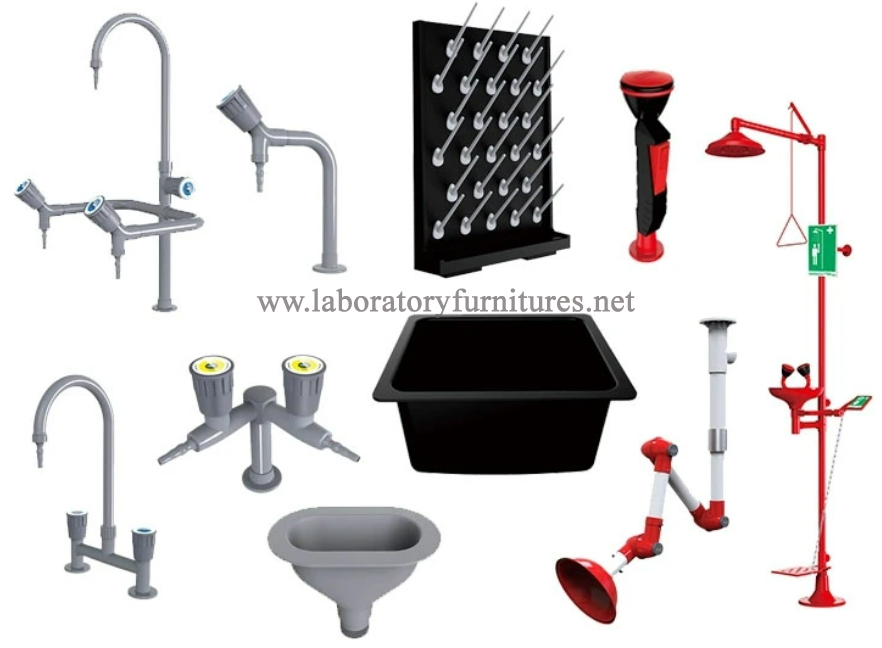
Laboratory Sinks and Faucets
-
Epoxy resin or ceramic sinks, polypropylene sinks offer strong resistance to acids and alkalis. PP sink is the most popular lab sink because it’s high cost performance.
-
Water or gas faucets with chemical-resistant coatings provide better durability in aggressive environments
Shelving and Reagent Racks
-
Tempered glass shelving improves visibility.
-
Steel two-tires reagent racks offer strength and corrosion resistance, expand space to store various chemicals in laboratory.
Other Lab Fittings
- Emergency shower, fume extractor, eye wash, pegboard, lab chairs are also necessary in some laboratories.
Socket Options:

6. Practical Lab Furniture Material Selection Tips
-
Match materials to lab functions: High-risk areas require epoxy resin,316 stainless steel or ceraic countertop.
-
Combine materials strategically: Many labs successfully use mixed solutions—epoxy worktops, stainless sinks, and steel cabinets
-
Review chemical resistance charts: Always confirm compatibility with specific reagents
-
Think long-term: Durable materials reduce downtime, repairs, and replacement costs
Material selection plays a critical role in laboratory safety, efficiency, and durability. By understanding the strengths and limitations of materials such as epoxy resin, phenolic resin, stainless steel, and steel cabinet, laboratories can achieve better performance and longer service life.
A well-designed laboratory is not defined by a single laboratory furniture material, but by choosing the right material for the right task.
Maybe you like also

©2023 Jiangsu Jiahong Laboratory Equipment Co,ltd.
All Rights Reserved.