
Modular Lab Furniture vs Fixed Lab Casework: Which Is Better for Your Lab?
2026-01-11
Laboratories change constantly. Research projects get updated, teaching curricula shift, and shared lab spaces need to accommodate new instruments and workflows. That makes lab furniture selection a critical and strategic decision, not just an traditional and fixed choice.
Many lab planners face a core question: should they go with traditional fixed lab casework, or invest in modular lab furniture including modular lab benches and modular lab tables?
This article compares the two systems from a practical operational perspective. We break down flexibility, installation, upgrade potential or future change, maintenance, and long-term lifecycle value, to help you decide which solution fits your university, pharmaceutical or research lab.
Understanding Fixed Lab Furniture Systems
A fixed lab furniture system is typically constructed and installed according to a predefined laboratory layout. Lab benches, cabinets, and service fixtures are permanently anchored to floors or walls, forming a rigid configuration that is difficult to alter once completed.
This approach is still used in laboratories with stable and predictable workflows. However, as laboratory functions become more diverse, fixed systems increasingly reveal limitations in adaptability and long-term efficiency.
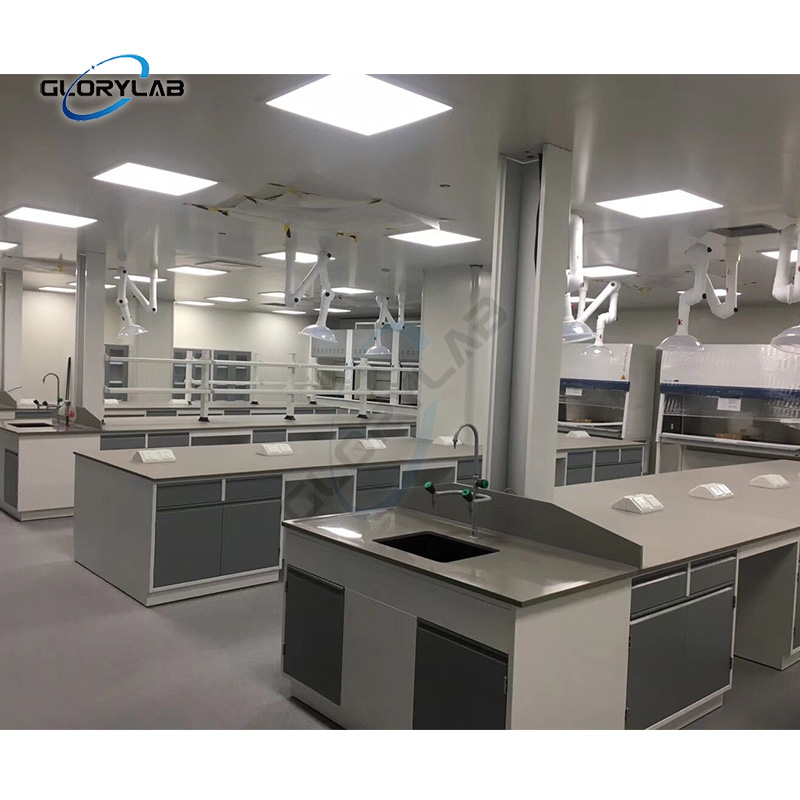
What Defines Modular Lab Furniture?
Modular lab furniture is built around standardized yet customizable components. Modular lab benches, modular lab tables, storage units, and service modules are assembled on independent frames, allowing them to be relocated or reconfigured without structural demolition.
Instead of designing a laboratory for a single purpose, modular systems support evolving lab casework designs by allowing layouts to change as requirements shift.

Performance Comparison in Lab Casework Design
| Design Factor | Fixed Lab Furniture | Modular Lab Furniture |
|---|---|---|
| Spatial Flexibility | Fixed, non-adjustable | Reconfigurable layout |
| Installation Method | On-site construction | Pre-engineered modules |
| Upgrade Capability | Limited | High adaptability |
| Maintenance Approach | Complex and disruptive | Localized component replacement |
| Long-Term Value | Declines over time | Retains reusable value |
| Sustainability | Higher material waste | Reduced waste through reuse |
Structural and Functional Limitations of Fixed Systems
From a lab casework design standpoint, fixed furniture systems impose several operational constraints:
- Restricted Layout Adjustments
Once installed, altering bench positions or cabinet configurations usually requires extensive labor. - Higher Lifecycle Cost
Even minor changes often lead to partial demolition, increasing renovation expenses over time. - Incompatibility with New Equipment
Fixed lab benches may not accommodate modern instruments without costly redesign.
These factors make fixed systems less suitable for laboratories expecting future expansion or functional changes.
Key Advantages of Modular Lab Benches
By comparison, modular lab furniture addresses many of the shortcomings associated with fixed installations.
1. Flexible Layout Planning
Modular lab benches and modular lab tables can be repositioned to support different workflows, class sizes, or research setups. This flexibility enables laboratories to respond quickly to changing demands without major construction.
2. Optimized Long-Term Investment
While initial procurement costs may be comparable, modular systems reduce future expenses by allowing existing components to be reused. This significantly lowers total ownership costs throughout the laboratory’s lifecycle.
3. Faster Installation and Commissioning
Because modular lab furniture is manufactured as standardized units, on-site installation is faster and more predictable. This minimizes laboratory downtime and reduces project scheduling risks.
4. Simplified Maintenance Strategy
In modular lab casework design, damaged worktops, cabinets, or frames can be replaced independently. This approach prevents full-system disruption and extends overall service life.
5. Improved Integration with Laboratory Services
Modern laboratories require frequent adjustments to power, water, gas, and data connections. Modular lab furniture systems are designed to accommodate service changes efficiently, supporting future technology upgrades.
Practical Applications of Modular Lab Benches and Tables
Modular lab furniture is particularly well-suited for:
- Educational laboratories with changing curricula
- Research facilities with evolving equipment needs
- Multi-purpose laboratories requiring shared spaces
- Cleanrooms or food industry
Modular lab furniture adapts quickly to frequent curriculum updates, rotating equipments, shared usage and strict cleanroom/food hygiene requirements, unlike fixed casework which is costly and disruptive to reconfigure.
It enables flexible layout rearrangement, easy component replacement and accessible sanitation clearance to meet changing operational and compliance demands across these facilities.
Why Modular Laboratory Workstations Is Preferred in Modern Labs
The shift from fixed systems to modular solutions reflects a broader trend in laboratory design. Modern labs prioritize flexibility, efficiency, and long-term planning. Modular lab furniture supports these goals by serving as a scalable infrastructure rather than a static installation.
From a lab casework design perspective, modular systems allow laboratories to remain functional and relevant for years without repeated structural renovation.
Example of Glorylab Modular Lab Table in New Zealand:

Project Advantages:
- Innovative and flexible design that optimizes space utilization while simplifying production and installation. It meets customers’ DIY needs through diverse configuration options and allows cabinets to be rearranged or replaced easily whenever required. Unlike traditional fixed lab casework, each cabinet here can be dismantled easily by a screw knife. It means cabinets are interchangeable or can be renewed to meet the different storage requirements in the future. It’s a renovation based on normal lab furniture.
- Advanced German equipment and technology are introduced into the manufacturing process, which are rarely adopted in the laboratory furniture industry, ensuring higher precision and consistent quality.
- Improved laboratory hygiene is achieved by leaving sufficient clearance between the cabinet base and the floor, eliminating hard-to-reach areas and preventing neglected sanitary corners. It’s an obvious advantage for such modular lab benches with mounted cabinets. This design is also suitable for cleanrooms, food introdustry or Micrology labs.
All things considered, modular lab furniture outperforms fixed casework for most evolving laboratories. With flexible modular lab benches and modular lab tables, your lab can adapt to new equipment, projects and workflows without costly demolition.
Glorylab supplies SEFA-compliant modular lab workstations built for university, pharmaceutical and research labs. Reach out to our team for your tailored lab design solution.
FAQ
Q1: Can modular lab furniture be mixed and matched with my existing fixed lab casework during a phased lab renovation?
A: Yes. Unlike fully permanent fixed bench systems, most modular lab furniture and modular lab benches are designed for phased integration. You can retain usable fixed cabinets while gradually adding interchangeable frame modules, without tearing out the entire lab at one time. This hybrid approach helps spread your capital budget over multiple project stages.
Q2: What layout limitations should I expect when using modular lab benches in cleanroom and food testing labs?
Modular lab benches offer a key advantage over fixed casework for these regulated spaces. They can be configured with open floor clearance, non-porous work surfaces and concealed service routing to satisfy hygiene and audit requirements. Fixed casework often creates hard-to-clean dead corners that risk non-compliance during inspections.
Q3: Will reconfiguring modular lab tables affect my lab’s safety certification or utility (gas/electrical) approvals?
When planned properly, reconfiguring standard modular lab tables will not automatically invalidate your lab safety approvals. Their pre-separated weak/strong electricity and gas service modules are independently rated. Major rework on fixed lab casework, by contrast, almost always triggers a full re-inspection of hard-plumbed and wired services.
Q4: If my research or teaching program shrinks temporarily, can modular lab furniture and modular lab workstations be relocated to other rooms or stored?
Yes. modular lab benches are demountable into separate frames, tops and cabinets. You can disassemble, relocate or store unused modules to reallocate space or budget. Fixed lab benches are permanently anchored; they cannot be repurposed elsewhere and usually become waste if the program scales down.
Maybe you like also

©2023 Jiangsu Jiahong Laboratory Equipment Co,ltd.
All Rights Reserved.